Diabetes in the UAE: Symptoms, HbA1c Test and Normal Blood Sugar Levels
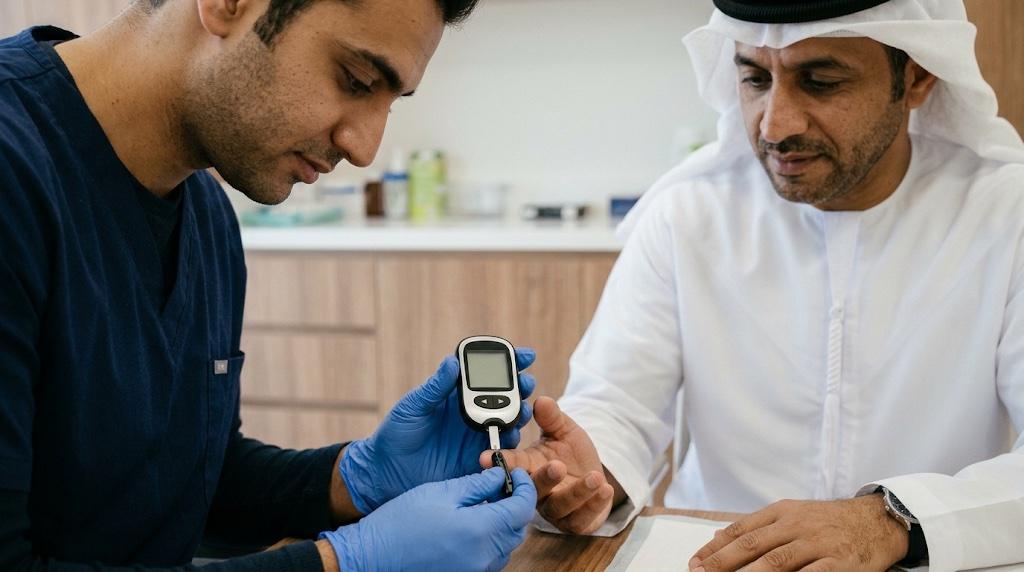
Diabetes in the UAE: symptoms, HbA1c test and normal blood sugar levels
Diabetes in the UAE is one of the most common long-term conditions. In the UAE National Health Survey, 11.8% of adults had raised fasting blood sugar or were already on diabetes medicine, and another 11.7% had blood sugar above normal but not yet in the diabetes range. More than 95% of people with diabetes have type 2, which the World Health Organization (WHO) says is often preventable. Its symptoms can be so mild that it goes unnoticed for years, so a simple blood test is the only reliable way to know. This guide explains the symptoms, normal blood sugar and HbA1c levels, who should be tested in Dubai and Abu Dhabi, and the regular checks people with diabetes need.
What is a normal HbA1c and blood sugar level?
An HbA1c below 5.7% is normal, 5.7% to 6.4% is prediabetes, and 6.5% or above points to diabetes, according to the Dubai Health Authority (DHA) type 2 diabetes guideline. A fasting blood sugar under 5.6 mmol/L (100 mg/dL) is normal, and 7.0 mmol/L (126 mg/dL) or above points to diabetes.
Blood sugar and HbA1c chart: what your result means
HbA1c shows your average blood sugar over the past 2 to 3 months, so you do not need to fast for it. A fasting blood sugar test is usually taken in the morning after an overnight fast. These ranges come from the DHA diabetes and screening guidelines:
| Result | HbA1c | Fasting blood sugar |
|---|---|---|
| Normal | Below 5.7% (below 39 mmol/mol) | Below 5.6 mmol/L (below 100 mg/dL) |
| Prediabetes | 5.7% to 6.4% (39 to 47 mmol/mol) | 5.6 to 6.9 mmol/L (100 to 125 mg/dL) |
| Diabetes | 6.5% or above (48 mmol/mol or above) | 7.0 mmol/L or above (126 mg/dL or above) |
One high result is not enough on its own. The DHA guideline says a diagnosis in someone without symptoms must be confirmed with a second test on another day. The exception is a person with clear symptoms and a random blood sugar above 200 mg/dL (11.1 mmol/L). HbA1c is not used to diagnose diabetes in children, in pregnancy or in people with some blood conditions such as thalassaemia, so your doctor will use a glucose test instead.
Symptoms of diabetes
The WHO lists these common symptoms:
- feeling very thirsty
- needing to pass urine more often than usual
- blurred vision
- feeling tired
- losing weight without trying
In type 2 diabetes these signs are often mild and can take years to notice, so many people are only diagnosed after damage to the eyes, kidneys, nerves or heart has already started. If you have any of these symptoms, ask your doctor for a blood test.
Types of diabetes
- Type 2 diabetes: the body does not use insulin properly. It is linked to being overweight, too little exercise and family history, and is now also seen in children.
- Type 1 diabetes: the body makes little or no insulin, so daily insulin is needed. It often starts in childhood, and its cause is not known.
- Gestational diabetes: high blood sugar that starts in pregnancy. It is found through routine pregnancy tests and raises the risk of type 2 diabetes later.
- Prediabetes: blood sugar above normal but below the diabetes range. The WHO says people with prediabetes are at high risk of type 2 diabetes, but it is not inevitable.
Who should be tested for diabetes in the UAE?
The DHA periodic health screening guideline advises a diabetes test (fasting blood sugar or HbA1c) every 3 years for adults aged 18 and over, and it can be yearly from age 30. Abu Dhabi's IFHAS programme includes HbA1c in its screening for Thiqa members every 3 years. The DHA diabetes guideline adds that testing should happen once a year for people found to be at high risk, including:
- adults over 40 whose risk assessment shows a high risk, for example because of weight, family history or high blood pressure
- adults aged 25 to 40 of South Asian, Chinese or Afro-Caribbean background, and women with polycystic ovary syndrome (PCOS), after a risk assessment
- people on long-term steroids or some other medicines
- women who had gestational diabetes, who need a fasting blood sugar 6 weeks after giving birth and an HbA1c every year for life
Regular checks if you have diabetes
The DHA type 2 diabetes guideline sets out these checks to protect your eyes, kidneys, feet and heart:
- HbA1c: every 6 months if it is on target, and every 3 months while your treatment is being adjusted.
- Eye check: a retinal screening every year with an eye specialist, as diabetes can damage the back of the eye. Book an eye exam if you have not had one in the past year.
- Kidneys: a blood test (creatinine and eGFR) and a urine test for protein (ACR) at least once a year. Compare clinics for a kidney function test.
- Feet: a yearly foot check with a podiatrist, because diabetes can reduce feeling and blood flow in the feet.
- Heart risk: blood pressure, weight and a cholesterol test at your review.
The guideline's general targets are blood pressure under 140/80 (under 130/80 if there is organ damage), not smoking, and an HbA1c target agreed with your doctor. For many people this is under 6.5% to 7.0%, but it is set higher where low blood sugar (hypoglycaemia) is a real risk.
How is type 2 diabetes treated?
A healthy lifestyle is the base of treatment. The DHA guideline recommends at least 150 minutes of moderate activity a week, strength exercise on 2 days, and less time sitting. If you are overweight, losing 5% to 10% of your weight helps. Many people also need medicine, such as metformin, sulfonylureas, SGLT-2 inhibitors or insulin, and often medicines for blood pressure and cholesterol too, as the WHO notes. An endocrinologist or your GP will agree a plan with you.
How to prevent type 2 diabetes
The WHO advises reaching and keeping a healthy weight, at least 150 minutes of moderate exercise each week, a healthy diet that avoids sugar and saturated fat, and not smoking. If you have prediabetes, these steps can delay or prevent diabetes, so act on the result rather than waiting.
Does insurance cover diabetes tests in Dubai?
Yes, at a basic level. Dubai's Essential Benefits Plan, the minimum cover for every Dubai health insurance policy, includes diabetes screening every 3 years from age 30, and every year from 18 for people at high risk. It also includes a blood sugar or HbA1c test for every pregnant woman, because diabetes is so common in the UAE. In Abu Dhabi, Thiqa members have HbA1c screening through IFHAS. Cover for ongoing diabetes care depends on your plan, so check your table of benefits.
Looking for a diabetes test in Dubai? Compare clinics and prices for an HbA1c test, diabetes screening or a full body check-up on MediFinder.
What is a normal HbA1c level?
Below 5.7%. An HbA1c of 5.7% to 6.4% is prediabetes, and 6.5% or above points to diabetes, under the DHA guideline. A second test is usually needed to confirm diabetes.
What is a normal fasting blood sugar?
Below 5.6 mmol/L (100 mg/dL). 5.6 to 6.9 mmol/L is above normal, and 7.0 mmol/L (126 mg/dL) or higher points to diabetes.
What are the first signs of diabetes?
Feeling very thirsty, passing urine more often, blurred vision, tiredness and unexplained weight loss. Type 2 diabetes often has mild or no symptoms at first, so regular testing matters.
Can prediabetes be reversed?
It often can. The WHO says lifestyle changes are the best way to prevent or delay type 2 diabetes: a healthy weight, at least 150 minutes of exercise a week, less sugar and saturated fat, and not smoking.
How often should I check my HbA1c?
If you do not have diabetes, at your routine check-up: every 3 years, or yearly if you are over 30 or at high risk. If you have diabetes, every 3 to 6 months, as your doctor advises.
Do I need to fast for an HbA1c test?
No. HbA1c reflects your average blood sugar over 2 to 3 months, so you can eat normally. A fasting blood sugar test does need you to fast, usually overnight.
Sources: DHA Clinical Guidelines for Management of Type 2 Diabetes (2024); DHA Dubai Periodic Health Screening Guideline (2024); DoH Abu Dhabi IFHAS adult screening standard (2025); World Health Organization: diabetes fact sheet; UAE National Health Survey 2017–2018; DHA Essential Benefits Plan (GC 03/2024). Photo: AI-generated illustration made for MediFinder (not a real patient or clinic). This article is for information only and is not medical advice. Always follow your doctor's advice.
Ready to check your blood sugar?
Find a GP for a quick blood test, an endocrinologist to manage diabetes, or read our guides to high blood pressure and men's health screening.
Comments
Be the first to comment!