Medifinder verified
 Medifinder verified
About
Bionix Clinic is a premier aesthetic and wellness clinic located in Dubai, with two state-of-the-art branches in Jumeirah and Al Barsha. The clinic specializes in advanced aesthetic technologies and offers a comprehensive range of services including injectables, skin treatments, laser technology, and body contouring. With a team of DHA-licensed professionals, Bionix Clinic is committed to delivering visible results while respecting the natural beauty of its patients. The clinic prides itself on personalized care, utilizing FDA-approved machines and premium skincare brands to ensure the highest standards of treatment. Bionix Clinic is dedicated to providing expert care and innovative solutions for all aesthetic needs, making it a trusted destination for individuals seeking non-surgical aesthetic treatments in Dubai.
Treatments & prices
109 treatments · updated 2 months agoPRP and PRF use a sample of your own blood, spun to concentrate the platelets, which is then injected or applied to the skin, with the number of sessions planned after a clinical assessment.
Fat-dissolving injections, usually deoxycholic acid, are given into small, localised pockets of fat over a course of sessions spaced weeks apart; they are not a weight-loss treatment.
Botulinum toxin injections relax selected muscles to soften movement lines, with the treated areas and dose planned after a clinical assessment.
Acne treatment is selected after assessing active breakouts, marks and scarring, which may need different clinic-based approaches.
Collagen induction therapy (microneedling) uses fine needles to make controlled micro-punctures that prompt the skin to produce collagen, with the number of sessions set after a skin assessment.
This hydration booster places small amounts of a fluid, usually hyaluronic-acid-based product into the skin to support moisture and skin quality, with the product and number of sessions set after an assessment.
Fat-dissolving injections, usually deoxycholic acid, are given into small, localised pockets of fat over a course of sessions spaced weeks apart; they are not a weight-loss treatment.
Laser hair removal uses light energy to target hair follicles and reduce regrowth over a course of sessions, with the device and settings chosen after checking your skin and hair type.
Laser hair removal uses light energy to target hair follicles and reduce regrowth over a course of sessions, with the device and settings chosen after checking your skin and hair type.
Laser tattoo removal uses short laser pulses to break tattoo ink into small particles that the body clears gradually, with the number of sessions depending on the ink, colours and skin type.
Botulinum toxin injections relax selected muscles to soften movement lines, with the treated areas and dose planned after a clinical assessment.
A thread lift places dissolvable threads under the skin to lift and support sagging areas of the face or neck, with the thread type and areas chosen after a clinical assessment.
An IV drip of antioxidants and vitamins, often vitamin C, glutathione and B vitamins, offered for skin care goals and given after a doctor has checked it is suitable for you.
This hydration booster places small amounts of a fluid, usually hyaluronic-acid-based product into the skin to support moisture and skin quality, with the product and number of sessions set after an assessment.
Fat-dissolving injections, usually deoxycholic acid, are given into small, localised pockets of fat over a course of sessions spaced weeks apart; they are not a weight-loss treatment.
A hair growth stimulator is a scalp treatment, usually a course of injections containing growth factors, peptides or vitamins, used for thinning hair after the cause of hair loss has been assessed.
Laser tattoo removal uses short laser pulses to break tattoo ink into small particles that the body clears gradually, with the number of sessions depending on the ink, colours and skin type.
Mesotherapy for fat and cellulite uses a series of small injections into the skin's middle layer to target localised fat and dimpling; it is not a weight-loss treatment, and sessions are set after assessment.
Hair and scalp mesotherapy delivers small injections of a blend, which may include vitamins, amino acids or peptides, into the scalp, usually as a course after the cause of hair loss is assessed.
PRP for hair uses a small sample of your own blood, spun to concentrate the platelets and injected into the scalp, usually as a course after the cause of hair thinning is assessed.
Salmon DNA treatment injects purified polynucleotides (PDRN) into the skin through a series of small injections, aimed at skin quality rather than volume, and is usually given as a course after a clinical assessment.
Intimate botox injects botulinum toxin into selected pelvic floor or vaginal muscles to relax painful spasm, such as in vaginismus, with the dose planned after a specialist assessment.
Under-eye rejuvenation covers non-surgical options such as injectables, skin boosters or energy-based treatments for fine lines, hollows or tired-looking skin, with the approach chosen after assessing the area.
Fat-dissolving injections, usually deoxycholic acid, are given into small, localised pockets of fat over a course of sessions spaced weeks apart; they are not a weight-loss treatment.
Laser tattoo removal uses short laser pulses to break tattoo ink into small particles that the body clears gradually, with the number of sessions depending on the ink, colours and skin type.
Non-surgical nose correction uses filler, and sometimes botulinum toxin or threads, to change how the nose looks without surgery; it cannot make the nose smaller and is planned after assessment.
This hydration booster places small amounts of a fluid, usually hyaluronic-acid-based product into the skin to support moisture and skin quality, with the product and number of sessions set after an assessment.
Fat-dissolving injections, usually deoxycholic acid, are given into small, localised pockets of fat over a course of sessions spaced weeks apart; they are not a weight-loss treatment.
Acne treatment is selected after assessing active breakouts, marks and scarring, which may need different clinic-based approaches.
An IV drip of antioxidants and vitamins, often vitamin C, glutathione and B vitamins, offered for skin care goals and given after a doctor has checked it is suitable for you.
Glutathione is given by IV drip or injection for skin lightening, an unapproved use with limited evidence, so results vary and suitability should be discussed with a doctor first.
Hip dip and buttock filler injects filler to add volume and shape to the hips and buttocks, a non-surgical option unlike a surgical Brazilian butt lift, with product and amount planned after assessment.
A vampire facial combines microneedling with platelet-rich plasma prepared from a small sample of your own blood, usually as a course planned after a clinical assessment of the skin.
Salmon DNA treatment injects purified polynucleotides (PDRN) into the skin through a series of small injections, aimed at skin quality rather than volume, and is usually given as a course after a clinical assessment.
Salmon DNA treatment injects purified polynucleotides (PDRN) into the skin through a series of small injections, aimed at skin quality rather than volume, and is usually given as a course after a clinical assessment.
Skin brightening treatments use options such as peels, facials, laser or topical care to address dullness and uneven tone, with the approach chosen after assessing the cause.
Fat-dissolving injections, usually deoxycholic acid, are given into small, localised pockets of fat over a course of sessions spaced weeks apart; they are not a weight-loss treatment.
Acne treatment is selected after assessing active breakouts, marks and scarring, which may need different clinic-based approaches.
This hydration booster places small amounts of a fluid, usually hyaluronic-acid-based product into the skin to support moisture and skin quality, with the product and number of sessions set after an assessment.
Glutathione is given by IV drip or injection for skin lightening, an unapproved use with limited evidence, so results vary and suitability should be discussed with a doctor first.
Laser hair removal uses light energy to target hair follicles and reduce regrowth over a course of sessions, with the device and settings chosen after checking your skin and hair type.
An IV drip that gives a mix of vitamins and minerals directly through a vein, with the blend chosen and suitability checked by a doctor, sometimes after blood tests.
Salmon DNA treatment injects purified polynucleotides (PDRN) into the skin through a series of small injections, aimed at skin quality rather than volume, and is usually given as a course after a clinical assessment.
Salmon DNA treatment injects purified polynucleotides (PDRN) into the skin through a series of small injections, aimed at skin quality rather than volume, and is usually given as a course after a clinical assessment.
Salmon DNA treatment injects purified polynucleotides (PDRN) into the skin through a series of small injections, aimed at skin quality rather than volume, and is usually given as a course after a clinical assessment.
Laser skin resurfacing removes or heats layers of skin to improve texture, fine lines and scarring, with the laser type, downtime and number of sessions set after a skin assessment.
Under-eye brightening uses injectable boosters or fine fillers placed under the eyes to address dark circles, thin skin or hollowness, with the product chosen after assessing the cause of darkness.
This hydration booster places small amounts of a fluid, usually hyaluronic-acid-based product into the skin to support moisture and skin quality, with the product and number of sessions set after an assessment.
Skin brightening treatments use options such as peels, facials, laser or topical care to address dullness and uneven tone, with the approach chosen after assessing the cause.
Masseter botulinum toxin injections relax the chewing muscles at the angle of the jaw, which can soften a wide lower face or ease clenching, with the dose planned after a clinical assessment.
A chemical peel applies a selected solution to exfoliate the skin, with the peel depth and recovery time matched to the concern being treated.
Collagen stimulator boosters are injectable biostimulators described as prompting the skin to build collagen gradually over weeks to months, with the product and number of sessions set after a clinical assessment.
Herbal peels use plant-based ingredients to exfoliate the skin and encourage surface renewal, with the peel strength, downtime and number of sessions set after a skin assessment.
Facial mesotherapy delivers many tiny injections of a blend, which may include vitamins, amino acids or hyaluronic acid, into the skin, usually as a course planned after a skin assessment.
Post-surgical scar treatment aims to soften and flatten surgical scars using options such as laser, microneedling, silicone care or steroid injections, with the approach chosen after assessing the scar.
Salmon DNA treatment injects purified polynucleotides (PDRN) into the skin through a series of small injections, aimed at skin quality rather than volume, and is usually given as a course after a clinical assessment.
Salmon DNA treatment injects purified polynucleotides (PDRN) into the skin through a series of small injections, aimed at skin quality rather than volume, and is usually given as a course after a clinical assessment.
Sculptra is an injectable poly-L-lactic acid collagen stimulator that is described as working gradually over weeks to months rather than on the day, usually given as a course after a clinical assessment.
PRP and PRF use a sample of your own blood, spun to concentrate the platelets, which is then injected or applied to the skin, with the number of sessions planned after a clinical assessment.
Under-eye rejuvenation covers non-surgical options such as injectables, skin boosters or energy-based treatments for fine lines, hollows or tired-looking skin, with the approach chosen after assessing the area.
Profhilo is an injectable hyaluronic acid skin booster placed at set points on the face or neck to spread through the skin and support hydration, usually as a short course after a clinical assessment.
This hydration booster places small amounts of a fluid, usually hyaluronic-acid-based product into the skin to support moisture and skin quality, with the product and number of sessions set after an assessment.
Face contouring fillers use injectable gel, usually hyaluronic acid, to add volume or definition to areas such as the cheeks, chin and jawline, with the areas and amount planned after a clinical assessment.
A carbon laser peel applies a thin carbon layer to the skin, then uses laser pulses to heat and lift it away, targeting oiliness, enlarged pores and dullness, after a skin assessment.
Hand fillers inject filler or a biostimulator into the back of the hands to restore volume where tendons and veins have become more visible, with the product chosen after a clinical assessment.
Facial mesotherapy delivers many tiny injections of a blend, which may include vitamins, amino acids or hyaluronic acid, into the skin, usually as a course planned after a skin assessment.
BioRePeel is a trichloroacetic acid-based peel used to exfoliate and refresh the skin's surface, with suitability and the number of sessions confirmed after a skin assessment.
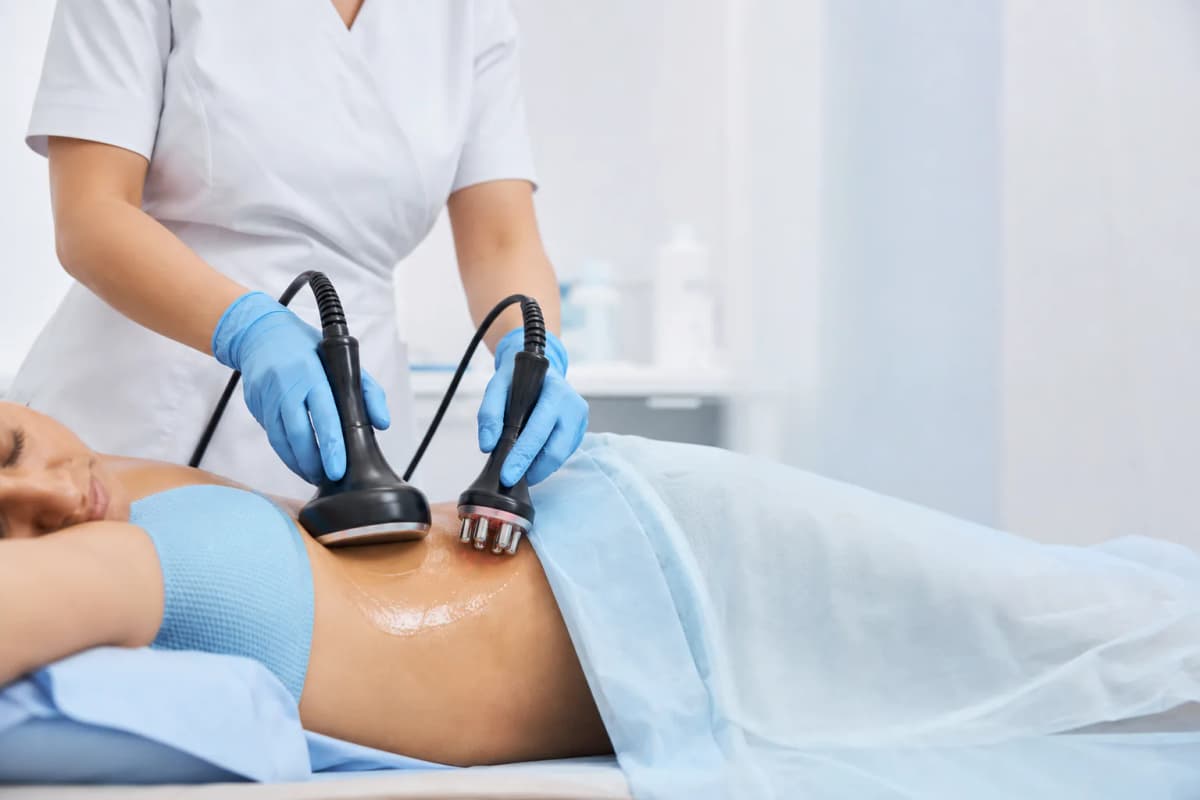
Radiofrequency cavitation pairs low-frequency ultrasound aimed at localised fat with radiofrequency heat to tighten skin; it is not a weight-loss treatment, and the number of sessions is set after an assessment.
HIFU body treatment focuses ultrasound energy on layers beneath the skin to heat small pockets of fat and firm the skin; it is not a weight-loss treatment, and sessions follow an assessment.
A so-called detox drip gives fluids, vitamins and antioxidants such as vitamin C or glutathione through a vein, with the contents and suitability checked by a doctor before the session.
Glutathione is given by IV drip or injection for skin lightening, an unapproved use with limited evidence, so results vary and suitability should be discussed with a doctor first.
An IV drip of vitamins such as biotin, minerals and amino acids offered to people concerned about hair thinning, usually after a doctor has looked into the cause of the hair loss.
An IV drip that gives a mix of vitamins and minerals directly through a vein, with the blend chosen and suitability checked by a doctor, sometimes after blood tests.
Face contouring fillers use injectable gel, usually hyaluronic acid, to add volume or definition to areas such as the cheeks, chin and jawline, with the areas and amount planned after a clinical assessment.
Hair transplant is a surgical procedure that moves hair follicles from a donor area to thinning areas using techniques such as FUE, DHI or FUT, with the graft count planned after assessment.
Mesotherapy for fat and cellulite uses a series of small injections into the skin's middle layer to target localised fat and dimpling; it is not a weight-loss treatment, and sessions are set after assessment.
HIFU for fat reduction and skin firming uses focused ultrasound to heat small areas of fat and deeper skin layers on the face or body, with the areas and sessions planned after an assessment.
This hydration booster places small amounts of a fluid, usually hyaluronic-acid-based product into the skin to support moisture and skin quality, with the product and number of sessions set after an assessment.
Botulinum toxin injections relax selected muscles to soften movement lines, with the treated areas and dose planned after a clinical assessment.
Herbal peels use plant-based ingredients to exfoliate the skin and encourage surface renewal, with the peel strength, downtime and number of sessions set after a skin assessment.
Under-eye rejuvenation covers non-surgical options such as injectables, skin boosters or energy-based treatments for fine lines, hollows or tired-looking skin, with the approach chosen after assessing the area.
Acne treatment is selected after assessing active breakouts, marks and scarring, which may need different clinic-based approaches.
Laser skin resurfacing removes or heats layers of skin to improve texture, fine lines and scarring, with the laser type, downtime and number of sessions set after a skin assessment.
Full-body laser hair removal uses repeated light-based sessions to reduce hair growth, with included body areas and device choice confirmed before treatment.
Acne treatment is selected after assessing active breakouts, marks and scarring, which may need different clinic-based approaches.
Laser skin resurfacing removes or heats layers of skin to improve texture, fine lines and scarring, with the laser type, downtime and number of sessions set after a skin assessment.
Salmon DNA treatment injects purified polynucleotides (PDRN) into the skin through a series of small injections, aimed at skin quality rather than volume, and is usually given as a course after a clinical assessment.
Face contouring fillers use injectable gel, usually hyaluronic acid, to add volume or definition to areas such as the cheeks, chin and jawline, with the areas and amount planned after a clinical assessment.
Non-surgical face lifting uses options such as threads, energy-based devices or injectables to address mild to moderate sagging, with the method chosen after a clinical assessment of the face.
Full-body laser hair removal uses repeated light-based sessions to reduce hair growth, with included body areas and device choice confirmed before treatment.
EMS muscle toning sends electrical impulses through pads on the skin to make muscles contract, as a supplement to exercise rather than a replacement, with the plan set after an assessment.
PRP and PRF use a sample of your own blood, spun to concentrate the platelets, which is then injected or applied to the skin, with the number of sessions planned after a clinical assessment.
Exosome skin treatment applies a manufactured preparation of cell-derived vesicles to the skin, often straight after microneedling or laser, with suitability, product and course length discussed at a clinical assessment.
A thread lift places dissolvable threads under the skin to lift and support sagging areas of the face or neck, with the thread type and areas chosen after a clinical assessment.
Full-body laser hair removal uses repeated light-based sessions to reduce hair growth, with included body areas and device choice confirmed before treatment.
Laser tattoo removal uses short laser pulses to break tattoo ink into small particles that the body clears gradually, with the number of sessions depending on the ink, colours and skin type.
Fat-dissolving injections, usually deoxycholic acid, are given into small, localised pockets of fat over a course of sessions spaced weeks apart; they are not a weight-loss treatment.
Collagen induction therapy (microneedling) uses fine needles to make controlled micro-punctures that prompt the skin to produce collagen, with the number of sessions set after a skin assessment.
The Nefertiti lift uses botulinum toxin injections along the jawline and neck bands to relax the platysma muscle and sharpen the jaw contour, with the dose planned after a clinical assessment.
Hyaluronic acid dermal fillers are injectable gels that add volume or smooth lines in selected areas and are gradually broken down by the body, with the product and amount planned after a clinical assessment.
CoolSculpting uses controlled cooling to reduce fat cells in a targeted area, which the body clears gradually over the following weeks; it is not a weight-loss treatment, and suitability is assessed first.
A hydration drip gives saline fluids and electrolytes through a vein, sometimes with added vitamins, with the volume and suitability checked by a doctor or nurse beforehand.
Locations
Opening hours⌄
- Monday
- 10:00 - 22:00
- Tuesday
- 10:00 - 22:00
- Wednesday
- 10:00 - 22:00
- Thursday
- 10:00 - 22:00
- Friday
- 10:00 - 22:00
- Saturday
- 10:00 - 22:00
- Sunday
- 10:00 - 22:00
Specialties
4 in totalKnown for
3 of 8 categories