
Radiology & Imaging
 Radiology & Imaging
Mammogram in the UAE.Compare 6 treatment prices from 5 providers.
Compare the cost of Mammogram in the UAE in one place: 6 published prices with source labels, what each provider charges, what each price includes. Prices range from AED 199 to AED 1,351. Typical cost: AED 400.
6 prices comparedPublished prices with source labelsAll 7 Emirates
Last Updated: August 2026



StudyContrastPrice


Mammogram
Mammogram, bilateral
At a glance
- Typical price range
- AED 199 – 1,351
- Usually covered by
- Almadallah · April International · Daman
- What it is
- A low-dose X-ray of the breast, used for screening and diagnosis
- Appointment length
- Around fifteen to twenty minutes in total
- The price question that matters
- Mammogram alone, or a package with ultrasound and consultation
- Typical insurance position
- Screening funded within an age band; diagnostic covered with approval
What a mammogram is
A mammogram is a low-dose X-ray of the breast used to find changes too small to feel. There are two distinct uses. A screening mammogram is done when you have no symptoms, to catch cancer early when treatment is most effective. A diagnostic mammogram is done because of a symptom such as a lump, skin or nipple change, or to investigate something seen on a previous scan, and it involves more views. Tomosynthesis, sometimes called three-dimensional mammography, takes images in thin slices and can improve detection in some breast tissue. Screening is a process rather than a single test: being recalled for extra views is common and usually ends with a normal result.
What drives the cost in the UAE
The main thing that changes the price is what the appointment bundles. Many UAE centres market a breast-screening package that includes the mammogram, an ultrasound and sometimes a consultation, and that package is a different product from a standalone screening mammogram. Diagnostic mammograms involve more views and are usually priced higher than screening. Tomosynthesis may be included or charged as an upgrade. Because several emirates run public screening initiatives and many insurers fund screening within an age band, a large share of women pay nothing at all, so the first question is not the price but whether you are inside a funded pathway. Where centres on this page publish verified prices, they appear above.
Insurance and coverage
Start by finding out whether you are inside a funded screening pathway, because that answer usually removes the cost question entirely. Several emirates run breast-screening initiatives, and many insurance plans cover a screening mammogram within a defined age band and interval as part of preventive care. Outside that band or interval, screening may be self-funded even on a good plan. A diagnostic mammogram ordered because of a symptom is a different category and is generally covered as a clinical investigation with prior approval. Two things to confirm with your insurer: whether supplementary ultrasound is covered alongside the mammogram, and what happens if you are recalled for further views, which is common and should not be treated as a new self-funded episode.
What to expect, and does it hurt
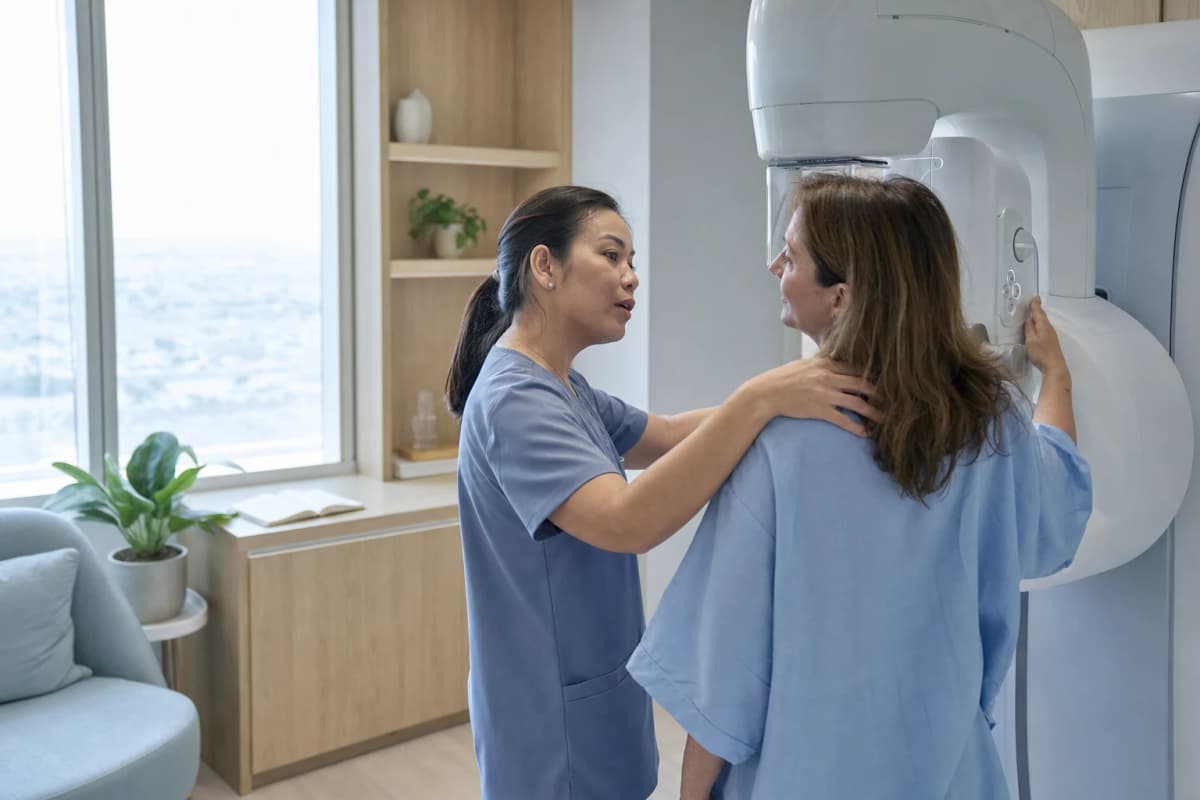
The appointment is short, usually around fifteen to twenty minutes in total. A radiographer positions each breast on the machine and compresses it firmly between two plates for a few seconds while the image is taken, then repeats from a second angle. The compression is what most women ask about: it is uncomfortable and briefly so, and it is necessary because it spreads the tissue, improves the image and lowers the radiation dose. Booking in the week after your period, when the breasts are usually less tender, makes it easier. Wear a two-piece outfit and avoid deodorant, talc or lotion on the day, since these can show up on the images. The radiologist reports afterwards, and results follow within days.
Dense breasts, recalls and the limits of screening
Two things are worth understanding before you go. First, dense breast tissue appears white on a mammogram, and so do many abnormalities, so screening is less sensitive in dense breasts. If your report mentions density, that is information about the test rather than a diagnosis, and your doctor may recommend supplementary ultrasound or, in higher-risk cases, MRI. Second, being recalled does not mean cancer has been found. Recall for extra views is a normal part of screening and most recalls end with a normal result, although the wait is stressful and it is fair to ask how quickly you will be seen. Screening also has limits: it can miss cancers and it can find changes that would never have caused harm. The radiation dose is low, and for women in the recommended age range the benefit of earlier detection is judged to outweigh it. Anyone with a strong family history should discuss starting earlier and whether additional imaging or genetic assessment applies.
Choosing a centre
Ask what the appointment includes: mammogram alone, or with ultrasound, tomosynthesis or a consultation. Ask whether a female radiographer is available if that matters to you, since most UAE centres arrange this and it is a reasonable thing to request when booking. Ask how quickly results are issued and who explains them to you. If you have had mammograms before, bring them or arrange for them to be transferred, because comparison with previous images is one of the strongest tools a radiologist has and can prevent an unnecessary recall. If you are recalled, ask how soon you will be seen and whether ultrasound or biopsy facilities are on site. Facility licence status shown on this site is checked against the regulator’s available records. That is a licensing check, not an endorsement of clinical quality or outcomes, and not a verification of any price.
What to compare in the published price
Whether the appointment is a screening mammogram alone or includes supplementary ultrasound, tomosynthesis or a radiologist consultation. Many UAE centres sell a combined breast-screening package, which is not the same product as a standalone mammogram. A mammogram is priced per appointment, but appointments differ. A standalone screening mammogram is one product; a breast-screening package bundling mammogram, ultrasound and a consultation is another, and comparing the two on price alone will mislead you. Diagnostic mammograms, done because of a symptom or an earlier finding, involve more views and are usually priced above screening. Ask exactly what the appointment includes, and whether further views on the day carry an extra charge.
Frequently asked questions
At what age should I start having mammograms in the UAE?
That is a decision to make with your doctor, and it depends on your age, family history and personal risk. Several emirates run screening initiatives with defined age bands, and many insurers fund screening within a similar band and interval. If you have a strong family history, discuss starting earlier and whether additional imaging applies.
Does a mammogram hurt?
The compression is uncomfortable and lasts a few seconds per image. It is necessary because it spreads the tissue, improves image quality and reduces the radiation dose. Booking in the week after your period, when breasts are usually less tender, makes it easier. Tell the radiographer if you are in pain.
What is the difference between a screening and a diagnostic mammogram?
A screening mammogram is done when you have no symptoms, to find changes early. A diagnostic mammogram is done because of a symptom such as a lump or a change in the skin or nipple, or to investigate a previous finding, and it involves more views. They are different appointments and are usually priced and approved differently.
My report says I have dense breasts. What does that mean?
It means more glandular and fibrous tissue relative to fat. Dense tissue appears white on a mammogram, as do many abnormalities, so the scan is less sensitive. It is a description of the test’s limits, not a diagnosis. Your doctor may recommend supplementary ultrasound, or MRI where risk is higher.
I have been recalled. Does that mean they found cancer?
Usually not. Recall for additional views or an ultrasound is a normal part of screening, and most recalls end with a normal result. It often happens because an area was unclear or overlapped on the first images. Ask how soon you will be seen, because the waiting is the hardest part.
Do I still need a mammogram if I check my breasts myself?
Yes. Being familiar with your own breasts is valuable and you should report any new lump or change to a doctor promptly, but self-examination finds changes only once they are large enough to feel. A mammogram detects changes well before that point, which is the whole purpose of screening.
Prices are collected from each provider’s own published pages. They are indicative and subject to change. Confirm the final price and what it covers with the provider. Facility licence status is checked against the regulator’s available records; that is not an endorsement of clinical quality or outcomes. This is general information, not medical advice.