
Radiology & Imaging
 Radiology & Imaging
CT Scan in the UAE.Compare 19 treatment prices from 6 providers.
Compare the cost of CT Scan in the UAE in one place: 19 published prices with source labels, what each provider charges, what each price includes. Prices range from AED 399 to AED 2,999. Typical cost: AED 699.
19 prices comparedPublished prices with source labelsAll 7 Emirates
6 of 6 providersCT Scan
6 providers, 19 confirmed pricesShowing 6 providers with 19 confirmed prices
Last Updated: August 2026


StudyContrastPrice
Upper extremityWithoutAED 499NeckWithoutAED 499Head (brain, face or PNS)WithoutAED 499Chest, abdomen, pelvis or spineWithoutAED 499Lower extremityWithoutAED 499AbdomenWithAED 699Pelvis or spineWithAED 699NeckWithAED 699ChestWithAED 699Lower extremityWithAED 699Upper extremityWithAED 699Head (brain, face or PNS)WithAED 699

StudyContrastPrice

Sponsored· MediFinder
Browse Treatments & Specialties
Explore medical and cosmetic treatments available across the UAE


CT Scan
Coronary CT angiogram
At a glance
- Typical price range
- AED 399 – 2,999
- Usually covered by
- Almadallah · April International · Aafiya
- Radiation
- Yes, uses X-rays; higher dose than a plain X-ray
- Typical duration
- A few minutes on the table; allow longer for preparation
- The price question that matters
- Which region, with or without contrast, report included or not
- Typical insurance position
- Covered with a referral and prior approval; screening usually not
What a CT scan is
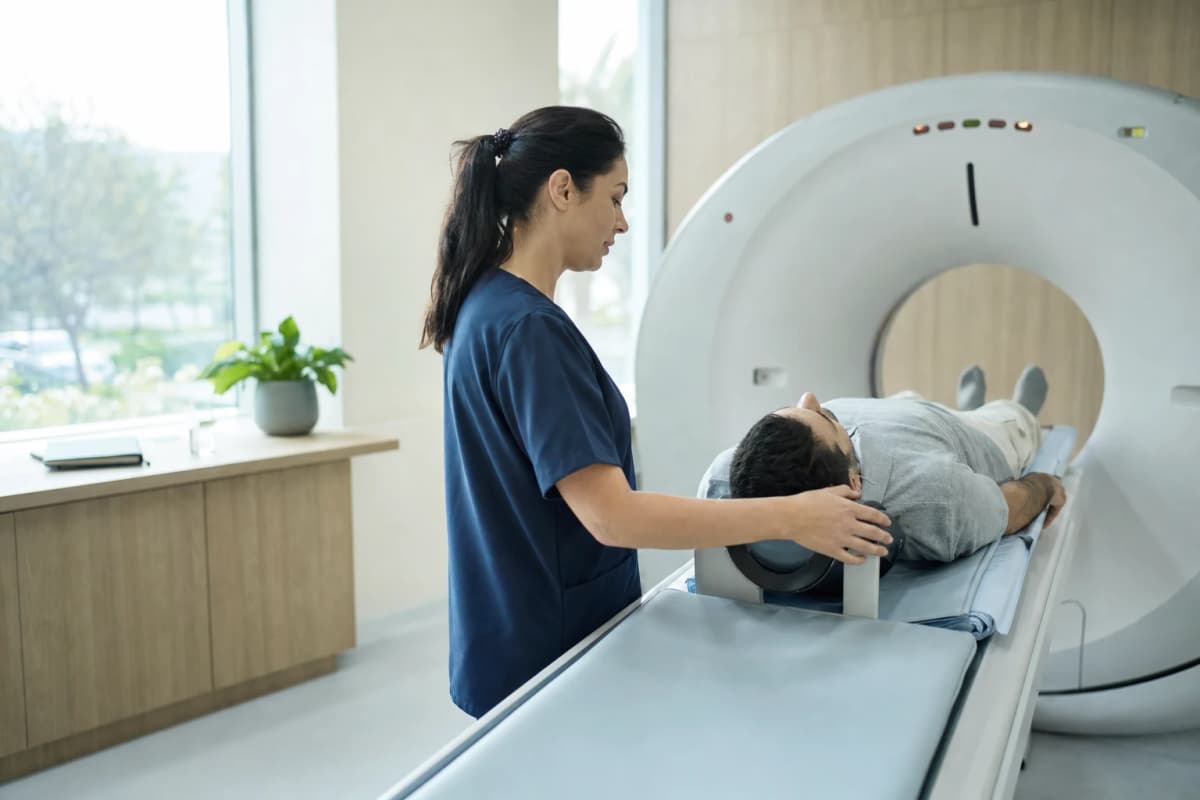
A CT scanner takes a rapid series of X-ray images from many angles and reconstructs them into cross-sectional slices of the body. It is fast, usually a few minutes on the table, and it is very good at showing bone, acute bleeding, the lungs and blood vessels. That speed is why it is the workhorse of emergency departments. You lie on a table that moves through a ring-shaped scanner, and you may be asked to hold your breath briefly for some sequences. Unlike an MRI, the scanner is open at both ends and short, so it rarely troubles people who dislike enclosed spaces.
What drives the cost in the UAE
The region scanned and the use of contrast are the two variables that matter, and they are the reason two quotes rarely describe the same study. A plain scan of one region sits at one level, a contrast-enhanced study of two regions at another, and specialist protocols such as CT angiography or coronary calcium scoring are separate products again. As with MRI, check whether the radiologist report is inside the quoted figure and whether you are charged for a copy of the images. If contrast is planned, ask whether a kidney function test is required beforehand and whether it is included. Where centres on this page publish verified prices, they appear above; otherwise quote your referral wording exactly when you call.
Insurance and coverage
For a planned outpatient CT, expect to need prior approval based on a referral that states why the scan is being done. Insurers apply more scrutiny to advanced imaging than to routine bloods, and a vague referral is the usual cause of delay. Approval covers a defined region and protocol, so a change on the day, such as adding contrast or a second region, can need a fresh approval. A CT performed during an emergency admission is handled through the emergency pathway instead. Scans arranged privately without a referral, and imaging requested purely as screening without a clinical indication, are commonly not covered. Check the centre is in your network first, because that single check decides whether you pay a co-payment or the whole bill.
What to expect on the day
Preparation depends on the protocol. Some studies require fasting for a few hours, some need you to drink an oral contrast solution beforehand, and many need nothing at all, so follow the centre’s instructions rather than assuming. If intravenous contrast is used, a cannula is placed in your arm and you may feel a warm flush and a metallic taste as it goes in, which is normal and passes quickly. The scan itself is short. You may be asked to hold your breath for a few seconds at a time. Afterwards you can usually eat, drink and drive as normal, and drinking water helps clear the contrast. The radiologist reports the images afterwards, so the written result follows separately.
Radiation, contrast and when CT is the right test
A CT uses ionising radiation, and the dose is higher than a plain X-ray, though modern scanners and low-dose protocols have reduced it considerably. For a clinically justified scan the benefit of the answer outweighs the small added lifetime risk, which is exactly why referral criteria exist and why repeated scanning without a clear reason is discouraged. Pregnancy is a specific consideration, so tell the team if you are or might be pregnant. Iodinated contrast is used with care in reduced kidney function, and you should mention any previous reaction to contrast, asthma or significant allergies. It is also fair to ask your doctor why a CT rather than an ultrasound or MRI, since for some questions those give the answer with no radiation at all.
Choosing an imaging centre
Network first, then the practicalities. Confirm the quote matches the exact study on your referral, including contrast, and ask whether the report is included and how quickly it is issued. Ask how you receive the images and whether the centre can send them to your referring doctor directly. If you have had a similar scan before, tell them, because comparing with a prior study frequently changes the interpretation and can occasionally avoid a repeat scan altogether. For children, ask what paediatric low-dose protocol they use. Facility licence status shown on this site is checked against the regulator’s available records. That is a licensing check, not an endorsement of clinical quality or outcomes, and not a verification of any price.
What to compare in the published price
The body region and whether intravenous contrast is used. A CT of the chest and a CT of the abdomen and pelvis are different studies, and a contrast-enhanced study costs more than a plain one. Whether the radiologist report is bundled is the third variable. A CT is priced by region and by whether contrast is used, so "how much is a CT" has no single answer. A plain chest CT, a contrast-enhanced abdomen and pelvis, and a CT angiogram are three different products at three different prices. Ask the centre to quote against the exact wording on your referral, and check whether the radiologist report is included. If contrast is planned, ask whether a kidney function blood test is needed first and whether that is priced separately.
Frequently asked questions
What is the difference between a CT and an MRI?
A CT uses X-rays and takes minutes; an MRI uses a magnetic field and takes much longer. CT is better for acute bleeding, bone detail, the lungs and blood vessels; MRI is better for soft tissue such as the brain, spinal cord, ligaments and joints. Your doctor picks the one that answers the clinical question.
How much radiation is in a CT scan?
More than a plain X-ray and none from an MRI or ultrasound, though modern scanners and low-dose protocols have reduced doses considerably. For a clinically justified scan the diagnostic benefit outweighs the small added lifetime risk. It is reasonable to ask your doctor whether a non-radiation test could answer the same question.
Why do I need contrast, and is it safe?
Iodinated contrast makes blood vessels and certain tissues stand out, and for many questions the scan cannot answer them without it. It is generally well tolerated. Tell the team about reduced kidney function, previous reactions to contrast, asthma or significant allergies, since these change how it is given or whether it is used.
Do I need to fast before a CT scan?
It depends on the protocol. Some studies require a few hours of fasting, some need an oral contrast drink beforehand, and many need no preparation. The centre will tell you when you book, so follow their instruction rather than a general rule you read elsewhere.
Is a CT covered by insurance in the UAE?
Generally yes when a licensed doctor refers you for a clinical reason and prior approval is obtained. Emergency scans follow the emergency pathway. Self-referred imaging and screening without a clinical indication are commonly excluded. Network tier, co-payment and annual limits still apply.
How long does the whole appointment take?
The scan itself is usually a few minutes, but allow longer for registration, any preparation such as an oral contrast drink, and cannula placement if contrast is used. The report is issued separately by a radiologist, so ask at booking how long that takes.
Prices are collected from each provider’s own published pages. They are indicative and subject to change. Confirm the final price and what it covers with the provider. Facility licence status is checked against the regulator’s available records; that is not an endorsement of clinical quality or outcomes. This is general information, not medical advice.