
 General Surgery
Varicose Vein Treatment in the UAE.
Verified standalone prices for Varicose Vein Treatment aren't available yet. Browse licensed providers and confirm availability directly.
Verified standalone prices aren't available yet
We only publish prices we can verify. Browse licensed General Surgery providers for Varicose Vein Treatment and confirm availability directly.
- Procedure type
- Outpatient, usually under local anaesthetic; you walk out the same day
- What decides coverage
- Symptoms plus a duplex ultrasound showing reflux, versus appearance alone
- Usually a plan, not one visit
- Closing the main vein and treating surface branches are separate steps
- Recurrence
- New veins can develop later; treatment manages rather than ends it
What varicose veins are
Varicose veins are enlarged, twisted surface veins in the legs, caused by valves inside the veins failing so blood pools instead of returning efficiently to the heart. They can be uncomfortable rather than merely visible: aching, heaviness, swelling by the end of the day, itching, night cramps, and in longer-standing cases skin discolouration, hardening around the ankle, and in some people a venous ulcer. Spider veins are the fine red or purple surface vessels, and they are a different and largely cosmetic problem, although they sometimes accompany underlying vein disease. The distinction between symptomatic varicose veins and cosmetic spider veins runs through everything on this page, including who pays.
Medical or cosmetic: the line that decides what you pay
This is the most useful thing to understand before you book anything. The same treatment on the same leg can be a covered medical procedure or an excluded cosmetic one, and what separates them is symptoms and evidence. If you have aching, swelling, skin changes, bleeding or an ulcer, and a duplex ultrasound shows reflux in the veins, that is venous disease and insurers generally treat it as a medical necessity. If your veins do not trouble you and you want them gone for how they look, and particularly if they are spider veins, that is cosmetic and you should expect to pay. In between sit many real patients, and this is why the consultation matters: describe your actual symptoms accurately, including how your legs feel at the end of a working day, and make sure the duplex findings and your symptoms are documented properly before an approval is submitted. Clinics that treat veins do both cosmetic and medical work, so be clear about which conversation you are having.
The treatment options and what they cost
Most treatment today is minimally invasive rather than the old surgical stripping. Endovenous laser and radiofrequency ablation both close the faulty vein from the inside using heat, through a small puncture under local anaesthetic. Medical adhesive closure seals the vein with a glue and generally avoids the need for compression stockings afterwards. Foam sclerotherapy injects a foam that irritates the vein wall so it closes, and microsclerotherapy does the same for spider veins. Surgery still has a place in some cases. Prices differ by technique and by leg, and the important point is that treatment is often staged: closing the main vein is one step and treating the visible branches is frequently a second. Ask for the cost of the whole plan, including the duplex ultrasound, compression stockings and any follow-up sessions, not just the first procedure.
Insurance and coverage
Approach this in the right order. First, get a proper assessment with a duplex ultrasound, because that scan is what demonstrates whether the valves are failing and it is the evidence any approval rests on. Second, make sure your symptoms are documented, not just the appearance of the veins. Third, expect your insurer to ask whether conservative measures such as compression stockings have been tried, since that is a common requirement before funding intervention. If all three line up, treatment for symptomatic venous disease is commonly covered with prior approval, subject to network tier, co-payment and annual limits. If the indication is appearance, expect to self-fund, and be wary of a clinic that promises to get a purely cosmetic case approved. Ask the clinic to confirm in writing what has been submitted and what you will owe if approval is partial.
What to expect
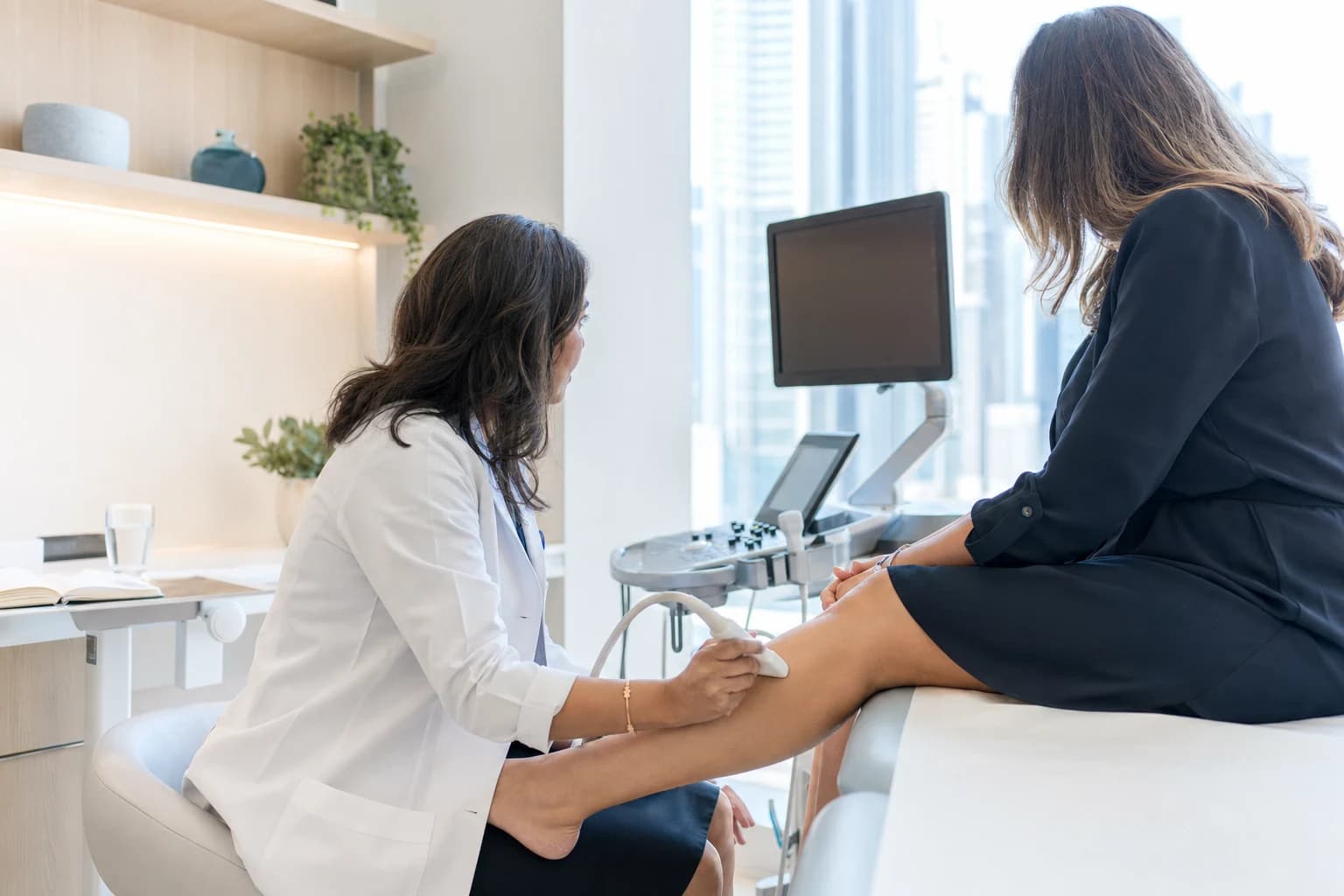
Treatment starts with a duplex ultrasound of the leg, usually standing, which maps which veins are refluxing. Modern ablation is done in a treatment room or day-case unit under local anaesthetic: a small puncture, a catheter passed into the vein under ultrasound guidance, and the vein closed from the inside. It typically takes under an hour and you walk out afterwards. Walking is actively encouraged, and most people return to office work within a day or two. Compression stockings are usually worn for a period, depending on the technique, and bruising, tightness along the treated vein and some tenderness for a week or two are normal. Sclerotherapy sessions are shorter and may need repeating. A follow-up scan confirms the vein has closed. New veins can develop over the years, so treatment manages the condition rather than guaranteeing you will never see a varicose vein again.
Risks and when to see a doctor sooner
Modern vein treatment is generally safe and done under local anaesthetic, but risks exist: bruising and tenderness are common, and less commonly there can be nerve irritation causing patches of numbness, skin staining after sclerotherapy, infection, and rarely a clot extending into the deep veins. Ask the clinic how they screen for and manage that. Not everyone is suitable for every technique, and the duplex findings decide which is appropriate. Separately, some leg symptoms are not varicose veins at all: a suddenly swollen, painful, warm calf can be a deep vein thrombosis and needs urgent assessment, not a cosmetic appointment. Skin that is breaking down around the ankle, a vein that bleeds, or an ulcer that is not healing should be seen promptly, because these are advanced venous disease and treating them earlier gives a better result.
Choosing a clinic
Look for a vascular specialist who performs a proper duplex assessment before proposing anything, and check the licence on the regulator’s register. A clinic that quotes a price before scanning your legs is selling a procedure rather than assessing a condition. Ask which techniques they offer, since a clinic with one machine can only recommend one approach. Ask how many sessions they expect your case to need and what the total plan costs, including the scan, stockings and follow-up. Ask how they handle the insurance question and what they will submit. Finally, ask what happens if veins recur, because they can, and knowing the clinic’s position in advance is better than discovering it in two years. Facility licence status shown on this site is checked against the regulator’s available records. That is a licensing check, not an endorsement of clinical quality or outcomes, and not a verification of any price.
Frequently asked questions
Will my insurance pay for varicose vein treatment?
It depends on whether the case is medical or cosmetic. Symptomatic veins with aching, swelling, skin changes or ulceration, supported by a duplex ultrasound showing reflux, are generally covered with prior approval. Treatment for appearance alone, and spider veins in particular, is normally excluded. Insurers often expect compression stockings to have been tried first.
What is the difference between varicose veins and spider veins?
Varicose veins are larger, raised and twisted, and can cause aching, swelling and skin damage. Spider veins are fine red or purple surface vessels that rarely cause symptoms. They are treated differently, priced differently, and insurers treat spider vein treatment as cosmetic.
Which treatment is right for me: laser, radiofrequency, glue or injections?
The duplex ultrasound decides, not preference. Laser and radiofrequency close the faulty vein with heat; medical adhesive seals it and often avoids compression stockings; sclerotherapy suits surface branches and spider veins. Many patients need a combination. Ask which the clinic proposes for your findings and whether they offer more than one.
How long is the recovery?
Most people walk out the same day and return to office work within a day or two. Walking is encouraged. Expect bruising, tightness along the treated vein and some tenderness for a week or two, and wear compression stockings for the period your clinic specifies. Strenuous exercise and long flights are usually restricted briefly.
Can varicose veins come back after treatment?
The treated vein stays closed, but new varicose veins can develop over the years because the underlying tendency does not go away. Treatment manages the condition rather than removing the possibility of recurrence. Ask the clinic what its policy is if further veins appear, and expect follow-up sessions to be part of a realistic plan.
Do compression stockings work on their own?
They relieve symptoms such as aching and swelling and can slow progression, but they do not repair the failing valves or remove the veins. Insurers commonly expect them to have been tried before approving intervention, so wearing them as advised also builds the documentation your approval may depend on.
When should leg symptoms be treated as urgent?
A calf that becomes suddenly swollen, painful and warm needs urgent assessment for a deep vein thrombosis. A vein that bleeds, skin breaking down around the ankle, or an ulcer that is not healing should also be seen promptly. These are not cosmetic appointments and should not wait.
Prices are collected from each provider’s own published pages. They are indicative and subject to change. Confirm the final price and what it covers with the provider. Facility licence status is checked against the regulator’s available records; that is not an endorsement of clinical quality or outcomes. This is general information, not medical advice.