
 Non-Surgical Face & Neck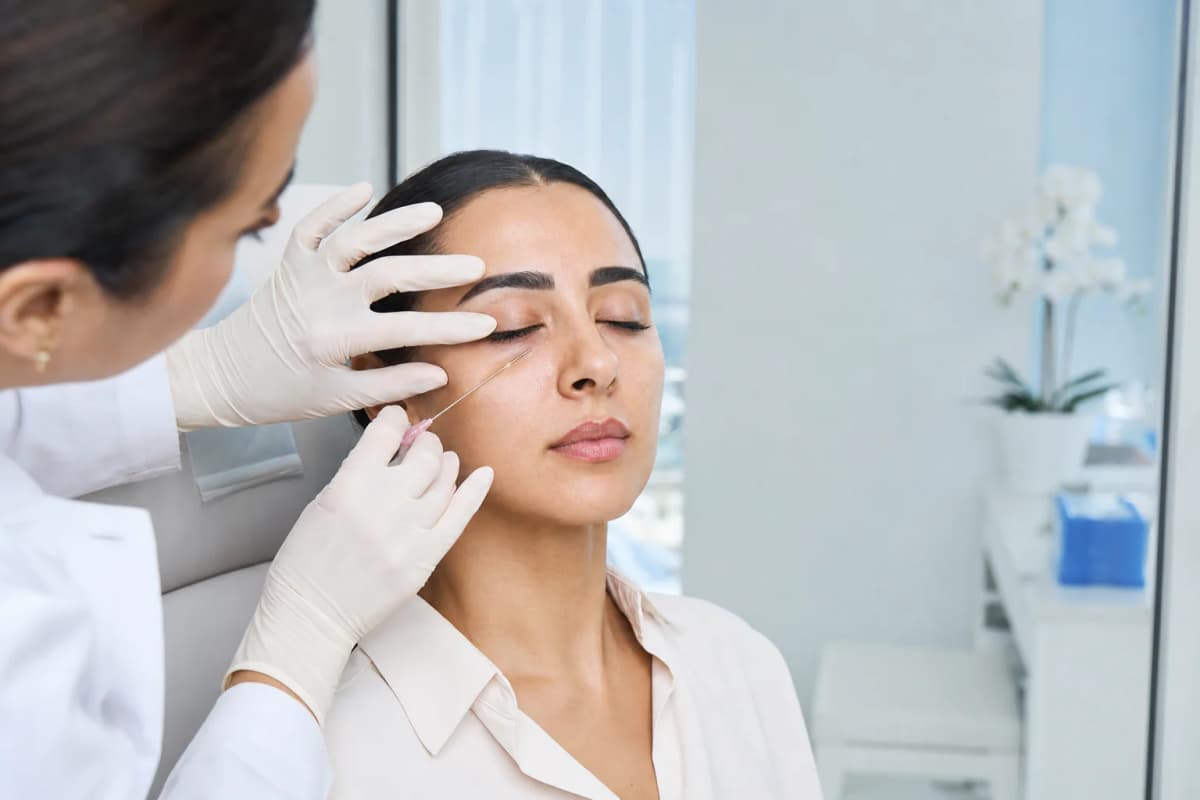

Cosmetic treatmentIn-clinicClinic listingAjman
This page lists 0 clinics offering Under Eye Filler (Tear Trough) in Ajman.
Featured listings
A short selection with published prices. Compare all clinics before choosing.
Under-eye filler, also called tear trough filler, is an injection of hyaluronic acid (a gel-like substance that occurs naturally in the skin) placed into the hollow that can form between the lower eyelid and the cheek. Filling that hollow reduces the shadow it casts, which is why some people describe the result as lighter dark circles. It is a temporary, non-surgical treatment: the body gradually breaks the filler down over months. It is not the right answer for every under-eye concern. Where the darkness comes from pigmentation, thin skin or visible vessels rather than a hollow, or where puffiness comes from prolapsed fat pads or loose skin, filler may not be suitable and can make the area look heavier. The tear trough is also one of the more technically demanding sites on the face, so an individual assessment by a licensed professional matters more here than the price does.
Medifinder does not yet have enough comparable prices to calculate a reliable UAE market range for this treatment. Available clinic prices are shown individually with their pricing units and last-confirmed dates.
Under-eye filler is quoted per syringe, per treatment, or as a package. The comparison above defaults to comparable per-syringe prices where enough clinics line up, because the syringe is the unit most clinics publish. Per-treatment quotes are listed separately rather than blended in, because a session price and a syringe price are not the same basis. The final cost depends on how much filler is planned, which product is used, and whether the figure covers both sides. Figures are indicative and clinic-published; confirm the amount, product, follow-up and any consultation fee directly with the clinic.
Different amounts and products are priced differently. A conservative half-syringe split between both sides usually costs less than a plan that also supports the mid-cheek, which uses more product. Formulations designed for thin under-eye skin can be priced differently from general-purpose fillers. Live prices are shown for a clinic only where its pricing unit is known; where it is not, the clinic is listed for context without a figure. A one-syringe price should not be read as the price for a plan that needs more.
Per syringe means the clinic quotes one price for a single syringe of filler, usually around 1 ml, and for the under-eye area that syringe is often shared between both sides, so one syringe can cover a whole treatment or only part of it. Per treatment means one price for the under-eye session regardless of how much product is used. These two bases are not directly comparable: a per-treatment figure can look lower while covering less filler, or higher while covering both sides and a review. Medifinder compares clinics on the per-syringe basis where enough of them line up, and lists per-treatment quotes separately for that reason. Products also differ: the under-eye area is usually treated with softer, less water-attracting formulations, so a per-syringe price should not be compared on the number alone. Ask which product is planned, how many millilitres, whether the figure covers both sides, and what a review or top-up would cost.
| Quote type | What it means | What to confirm |
|---|---|---|
| Per syringe | A price for one syringe of filler, usually about 1 ml, which may be shared across both under-eye areas. | The product, the volume in the syringe, and how many syringes your plan needs. |
| Per treatment | One price for the under-eye session, whatever amount of filler it happens to use. It is not the same basis as a per-syringe price and the two should not be read against each other. | How much filler is included, whether both sides are covered, and what happens if more is needed. |
| Package | A defined plan for one price, sometimes combining the tear trough with cheek support or a review visit. | Exactly which areas and how much product are included, and whether a top-up is part of it. |
To compare prices like for like rather than by headline number alone, confirm what a quote covers before booking. On this treatment the follow-up review and how a complication would be handled matter as much commercially as the product does, because a correction is a separate procedure with its own cost. The items below are the ones that most often differ between clinics.
Several hyaluronic acid ranges include products commonly chosen for the under-eye area, such as Restylane Refyne or Vital, Juvederm Volbella or Volite, Teosyal Redensity II and Belotero Balance. They differ in how soft they are, how much water they attract and how they behave under thin skin; the last point matters here, because a product that draws in a lot of water can leave the area looking puffy. That is why the product chosen for the cheeks or lips is not automatically the one used under the eye, and why per-syringe prices cannot always be compared directly between products. A clinic should tell you which product it plans to use and why. This page does not present any brand as superior to another.
The amount of filler is usually the largest driver: a plan that supports the mid-cheek as well as the tear trough uses more product than a conservative correction. The product itself matters, as ranges differ in price and in how they behave under thin skin. The experience of the person injecting is a real factor on this site in particular, and clinics often price accordingly. Whether the quote includes a follow-up review at two to four weeks, and what a top-up or a correction would cost, can change the total more than the headline figure suggests. The clinic’s location and whether the price covers both sides also matter. Ask for the planned amount and the expected total before comparing two quotes.
The facts below are typical and general. Individual assessment by a licensed professional decides what applies to you.
| Clinical name | Hyaluronic acid filler, tear trough correction |
|---|---|
| Appointment time | About 20–40 minutes (typical) |
| Technique | Microcannula or needle; deep placement |
| Comfort measures | Topical numbing; many products contain anaesthetic |
| Downtime | Swelling or bruising for several days |
| Result reviewed | Around 2–4 weeks |
| Typical duration | ~9–18 months; varies |
| Reversible | Usually dissolvable with hyaluronidase |
| Risk profile | Higher-risk injection site; rare vascular and vision risk |
| Practitioner | Licensed doctor experienced in this specific area |
| Insurance | Cosmetic use generally paid privately |
Before treatment, a practitioner reviews your medical history and current medication, discusses pregnancy or breastfeeding where relevant, and examines the area to work out what is actually causing the hollow or the shadow. Part of that conversation is whether filler is the right route at all. If it is, they should tell you which product they plan to use, how much, and whether a needle or a microcannula will be used; many practitioners prefer a cannula here, and the choice is a clinical judgement rather than a marketing point. During treatment, small amounts are placed deeply against the bone rather than superficially, because superficial placement under thin skin is what tends to produce lumps or a bluish tinge. The appointment usually takes about 20–40 minutes including numbing. Afterwards, swelling, tenderness or bruising is common for several days, and bruising can be more visible here than elsewhere on the face because the skin is thin. The area often looks fuller than the final result at first, and it is normally reviewed at around two to four weeks before deciding whether anything more is needed. Hyaluronic acid filler in this area commonly lasts around nine to eighteen months, though this varies between people and products and some of it can persist longer.
The tear trough is widely regarded as one of the higher-risk sites for filler, because of the blood vessels around the eye and the thinness of the overlying skin. Suitability and risk depend on the product, the technique, the anatomy and the practitioner, and a licensed professional should assess the individual before treatment. Common and usually temporary effects include swelling, tenderness, redness and bruising. Effects more particular to this area include the Tyndall effect (a bluish or greyish tinge where filler sits too superficially) visible lumps or ridges, and lasting puffiness where the product attracts water or is placed in an area that drains poorly. These may need review, and sometimes correction. Rare but serious risks include infection and a vascular event, where filler affects a blood vessel; around the eye this can, very rarely, affect vision. Prompt medical attention matters if you notice severe or increasing pain, blanching or skin colour change, or any change in vision. Hyaluronic acid filler can usually be dissolved with an enzyme called hyaluronidase, which is one reason it is used here rather than a permanent product; ask whether the clinic keeps it on site. Not everyone is suitable. Under-eye darkness caused by pigmentation, thin skin or prominent vessels, and puffiness caused by prolapsed fat pads or loose skin, are not volume problems and may not improve with filler. Treatment is generally avoided in pregnancy and breastfeeding, and some conditions or medicines need discussion first.
Look beyond the headline number. Check whether the price is per syringe, per treatment or a package, how much filler is included, whether it covers both sides, and whether a review at two to four weeks is part of the price. Ask which product will be used and why it suits the under-eye area, whether a needle or a cannula is planned, who will perform the injection and how often they treat this specific site. It is reasonable to ask whether hyaluronidase is kept on site and how the clinic would handle a complication. The relevant facility and professional regulator depends on the clinic’s location. Where Medifinder shows a facility-licence status, it means the clinic’s licence was checked against the regulator’s available records. It is not an assessment of clinical quality or of who performs the treatment. Confirm the final quote and your suitability directly with the clinic before booking.
Under-eye filler is offered across the UAE. Choose an emirate to see local clinics, local prices and neighbourhood filters. Local availability and prices vary between clinics rather than by a single rule per emirate.
People comparing under-eye filler often also look at under-eye PDO threads, which support and stimulate the skin rather than adding volume; at hyaluronic acid fillers for other areas of the face; at lower eyelid surgery, where the concern is loose skin or fat pads rather than a hollow; and at filler dissolving, which is the route if an existing result needs correcting. The links below lead to related comparisons where Medifinder has enough information for a useful page.